
$15–30 / month forever
- Same sticker template as 1,000 other shops
- Centered product on white, reads as catalog
- Subscription that auto-renews every month
- Manual scene swap every shoot
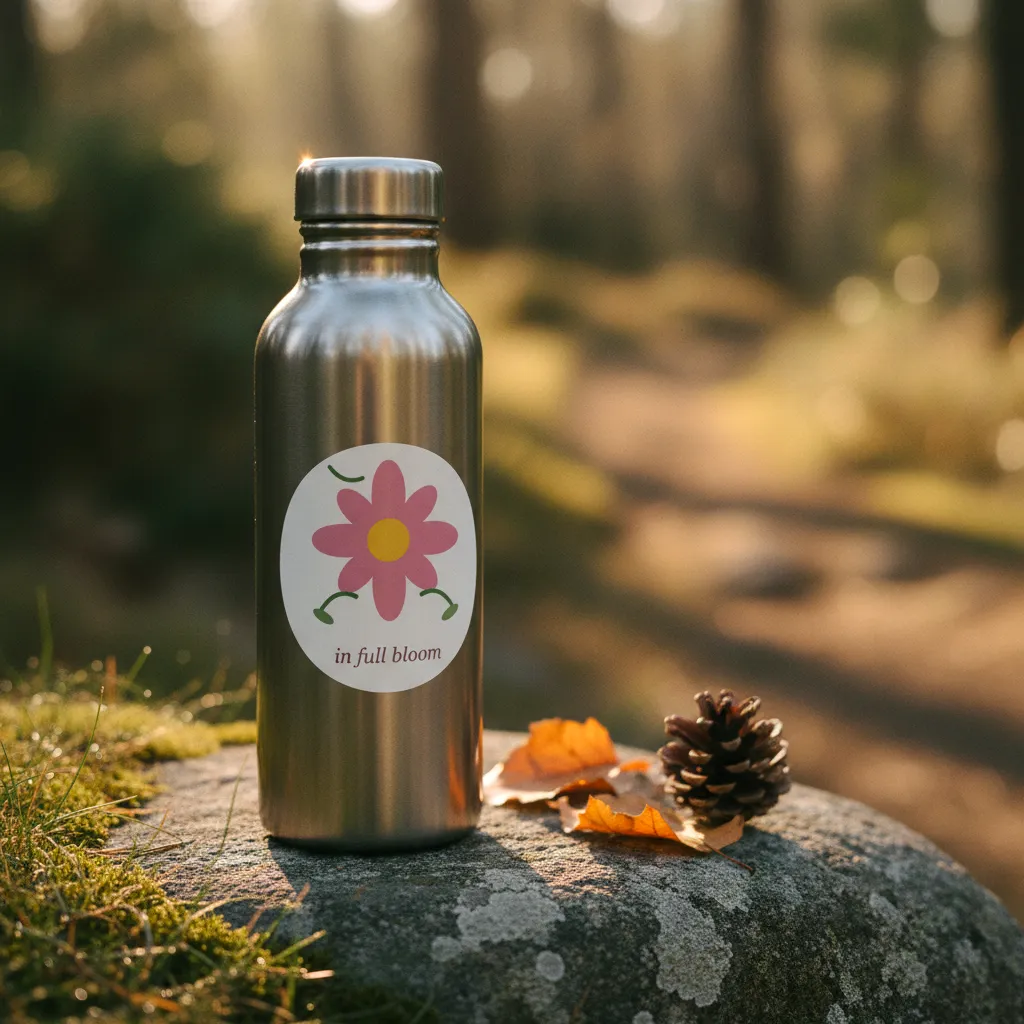
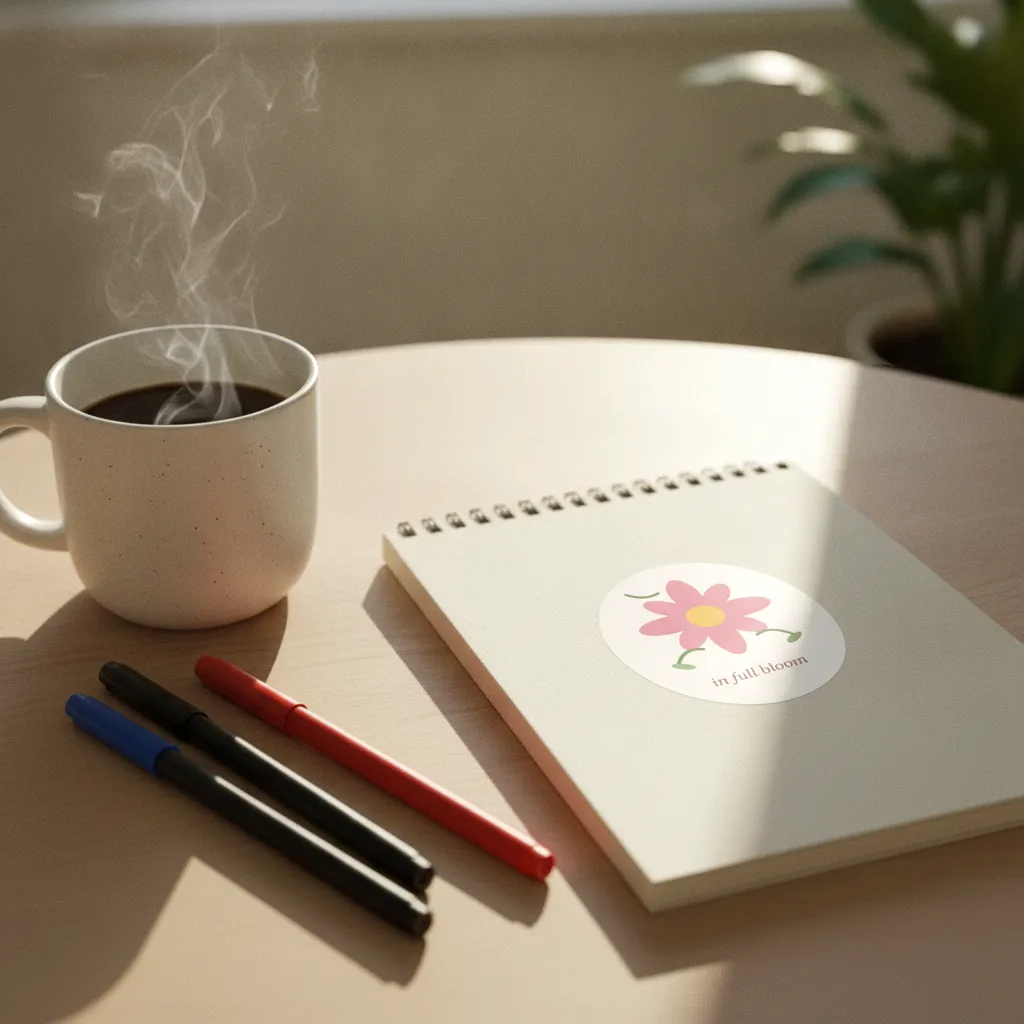
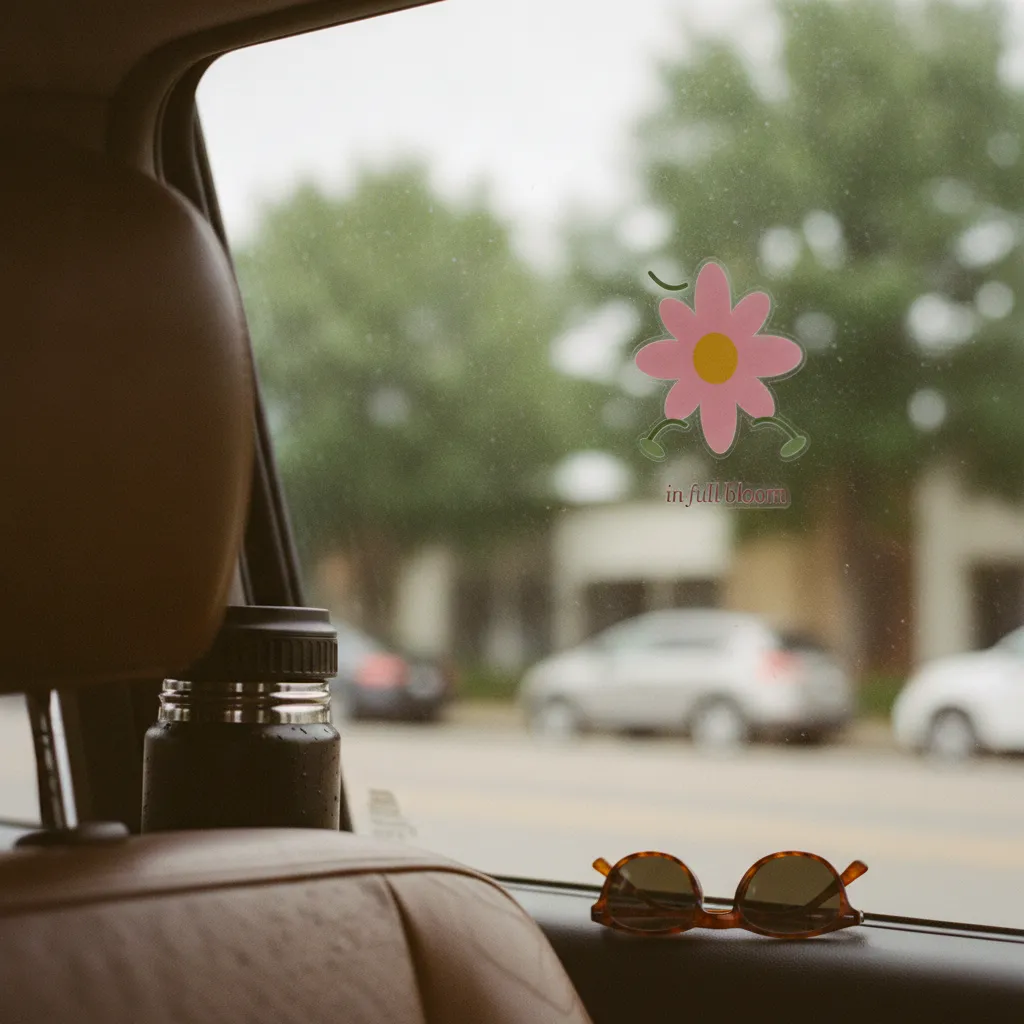
Sticker photos that show the sticker living somewhere — laptop in a cafe, notebook flatlay, water bottle, morning desk, cozy interior. Real-looking placement, not a centered cutout.
Try free on your sticker design
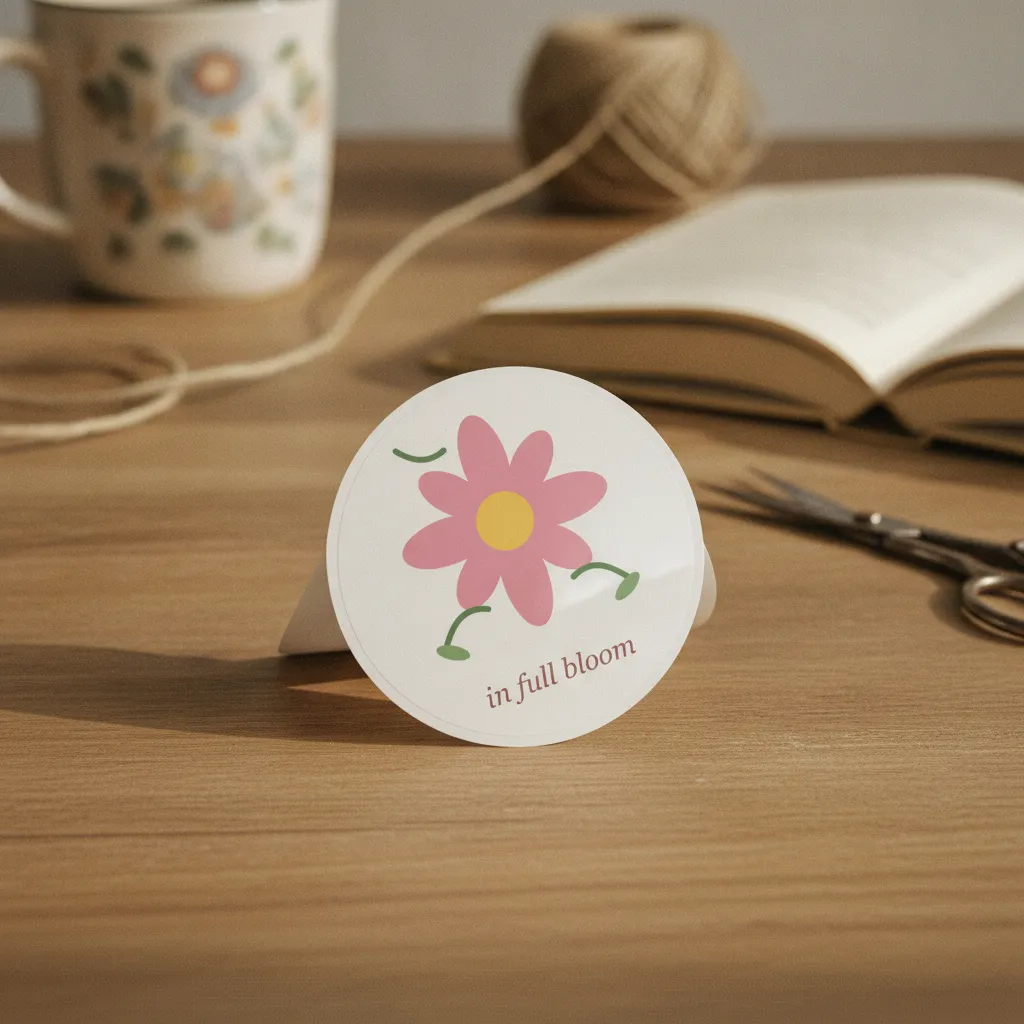
Upload one stickerdesign and Hauld returns 5 lifestyle scenes — cropped, color-graded, ready for your listing carousel. The examples below are real Hauld renders on a sample design.
Almost every sticker listing on Etsy opens the same way: the design floating dead-center on a white square. It's clean, but it tells the buyer nothing. A sticker is an impulse buy tied to a feeling — this on my laptop lid, this on my water bottle, this on the back of my notebook. When the first photo already shows that, the buyer skips the guesswork and pictures it on their own stuff. That mental leap is what turns a browse into an add-to-cart.
Scale is the other thing a white square hides. Is this a chunky 4-inch die-cut or a tiny 2-inch accent? Buyers can't tell, and unclear size is a top reason people bounce or leave a bad review. A photo on a real laptop corner or the curve of a bottle answers that in one glance, before anyone reads the dimensions. Lifestyle shots also carry the finish: holographic and glitter vinyl look flat on a plain scan, but show the shimmer catching light in a scene and it reads — which is most of what someone is paying extra for.
Template mockups fail stickers in a specific way. A smart-object overlay flattens your art onto a photo of a laptop, so the sticker looks printed into the surface — no edge, no lift, no proof it's a real thing you could peel. The tell is the missing edge shadow: a real vinyl sticker sits a hair above the surface and casts a thin shadow around its cut line. Templates fake this with a generic drop shadow that ignores the actual shape of your die-cut.
Hauld renders the sticker from scratch on Gemini 2.5 Flash Image for every scene. The cut line follows your artwork's real silhouette — die-cut contour or kiss-cut border — because the model respects the transparency in your uploaded PNG instead of pasting a rectangle. On a curved water bottle the sticker bends with the surface and the glare wraps with it; on a matte laptop lid it stays flat with a soft contact shadow. Ask for holographic and the iridescence shifts across the scene the way foil does. And because each of the 5 photos is generated fresh, not stamped from one template, you don't end up with the same laptop-and-coffee shot as every other shop in the category.
Upload a transparent PNG cut to the shape you actually sell — the outline is what the render reads as the sticker edge, so a clean cutout beats a design on a white or checkered background. SVG works too. If it's holographic, glitter, or clear vinyl, put that in the design name so the finish renders instead of default matte. For a sticker sheet, upload the whole sheet as one file and the scenes lay it out together.
Then let the 5 scenes do carousel duty. Lead with the strongest in-use shot — laptop in a cafe or water bottle — as your thumbnail, since that's the frame that stops a scroller. Follow with the notebook or desk flatlay so the design reads flat and legible, then the rest for range across surfaces and light. Hauld gives you 4:5 vertical 2048px files, sized for Etsy and Shopify. Try one free watermarked photo on your own sticker first, regenerate any shot that misses up to 5 times, and full commercial rights come with every batch.
Yes — the AI respects the shape of your uploaded PNG, including transparency.
Upload your sheet design as one file and pick "sticker"; the AI lays it out across the scenes.
Mention the finish in the design name and we tune the prompt for the right reflective look.